
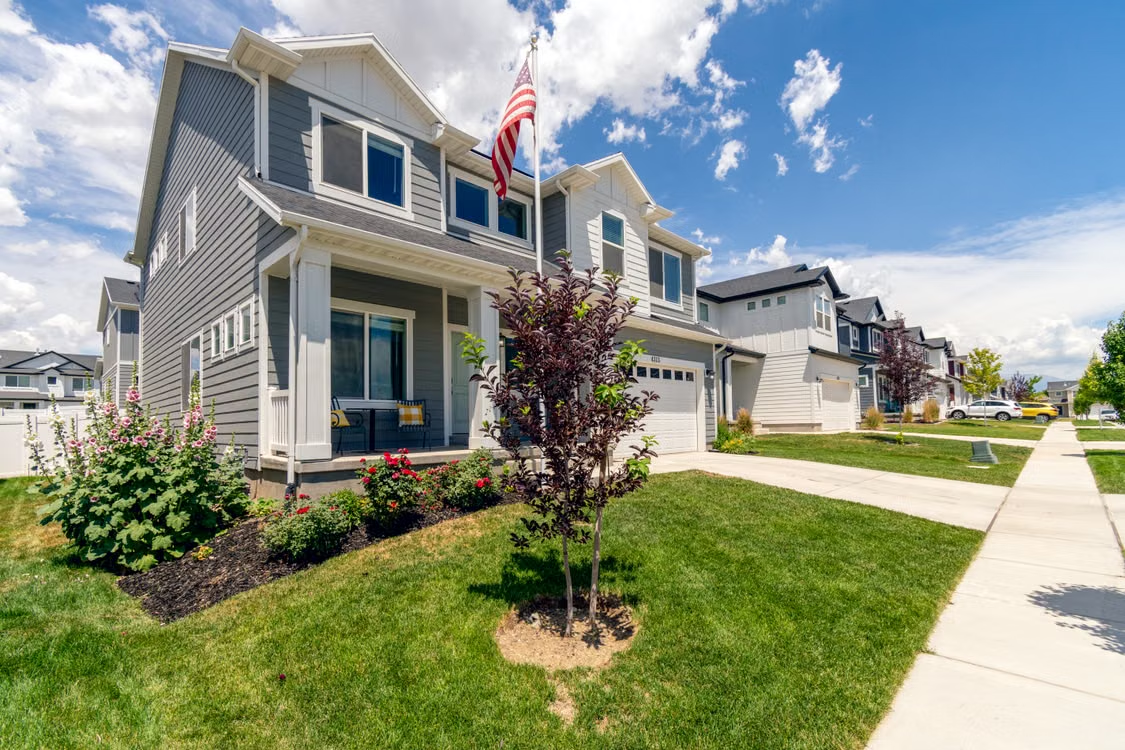

If you served in the military, the VA loan program is one of the most valuable benefits available to you as a homebuyer. It lets eligible veterans, service members, and some surviving spouses buy a home with no down payment and no monthly mortgage insurance. In California, where home prices run well above the national average, that benefit can mean the difference between renting and actually owning. This guide covers eligibility, credit, funding fees, and how CalVet compares to a federal VA loan.
Veterans Affairs provides a guarantee for these specific home financing products, which are facilitated by non-government financial institutions like credit unions or banking organizations. Since the agency itself isn't a direct lender, it secures a segment of the debt, enabling financial providers to offer advantages that are uncommon for standard mortgages, such as the elimination of both upfront deposits and recurring monthly protection payments.
This helps veterans who moved often between duty stations and never had time to save for a large down payment. It also tends to come with lower rates than a comparable conventional loan. If you're new to the process, this overview of VA loan basics breaks down the terms you'll run into most often.
Qualification is determined by the duration and timing of your military service. Typically, veterans meet the criteria if they completed 90 days of wartime active duty, 181 days of peacetime active duty, or served in the National Guard or Reserves for six years. Additionally, the spouses of personnel who lost their lives while serving may be eligible.
The official VA loan eligibility guidelines lay out the exact service windows by era. Once you qualify, your lender requests a Certificate of Eligibility, the document that tells them the VA stands behind your loan.
The VA itself sets no minimum credit score. That's left to individual lenders, and most land around 620, though some will work with scores in the 580 to 600 range if the rest of the file looks strong.
Lenders also weigh your debt-to-income ratio and residual income. A lower score usually means a tighter cap, so it's worth reviewing your VA credit requirements and paying down revolving debt before you shop for a lender.

Most VA loans carry a one-time funding fee, which keeps the program funded since there's no monthly mortgage insurance. The fee usually runs 2.15% for first-time use with no down payment, and 3.3% for a second or later use. A down payment of 5% or more drops it to 1.5%, and 10% or more drops it to 1.25%, whether it's your first VA loan or your third.
Veterans with a service-connected disability rating of 10% or higher, along with Purple Heart recipients and some surviving spouses, are exempt from the fee entirely. You can pay it upfront or roll it into your loan balance. Once you know your numbers, it's worth taking a closer look at Mares Mortgage's VA loan programs to see what amount fits your budget.
California runs its own veteran home loan program through the California Department of Veterans Affairs, known as CalVet home loans. Instead of a private lender with a VA guarantee, CalVet funds loans through tax-exempt state bonds and holds legal title until the loan is paid off.
CalVet offers flexible underwriting for veterans with less-than-perfect credit and bundles fire, earthquake, and flood insurance at group rates. Federal VA loans usually offer more lender options and can fit better if you plan to leave California down the road.
California Mobile Home Loans and Financing Options
VA loans aren't a single product. The most common is the standard purchase loan, for buying a primary residence with no down payment. There's also the Interest Rate Reduction Refinance Loan, or IRRRL, which lets veterans with an existing VA loan refinance into a lower rate for a fee of just 0.5%. A VA cash-out refinance lets you tap into your home's equity.
For veterans financing land along with a home, it helps to know how purchase money loans work, since the mechanics differ from a standard refinance. First-time buyers especially benefit from walking through the numbers before making an offer.

The Ultimate Guide for California First-Time Home Buyers
The process starts with getting your Certificate of Eligibility, either through the VA's eBenefits portal or your lender. From there, you'll go through preapproval, which gives you a realistic price range before touring homes. If you want a full walkthrough of veteran home loans from application to closing, it helps to see the timeline first.
After going under contract, a VA appraisal will be ordered by the lender to evaluate the safety and market value of the home. Typically, the timeline from contract signing to final closing spans between 30 and 45 days.
Every veteran's situation looks different, whether that means PCS timelines or using the benefit again. Someone who understands military pay stubs, VA appraisals, and funding fee exemptions makes the process smoother. Connecting with a loan officer who specializes in military and veteran financing can save you a lot of back and forth.
Buying a home in California is never simple, but the VA loan benefit removes some of the biggest obstacles. No down payment, no mortgage insurance, and a program built around military life go a long way toward making homeownership possible. Whether you choose a federal VA loan or California's CalVet program, the most important step is talking to someone who can walk you through your numbers first.


.png)

