


Shopping for a home usually starts with two terms that get used interchangeably, even though they mean very different things. Pre-qualification and pre-approval both give you a sense of what you might be able to borrow, but only one carries real weight when you're competing for a house. Knowing which stage you're in, and what your lender still needs from you, can save you time and help you avoid a disappointing surprise once you find a place you love.
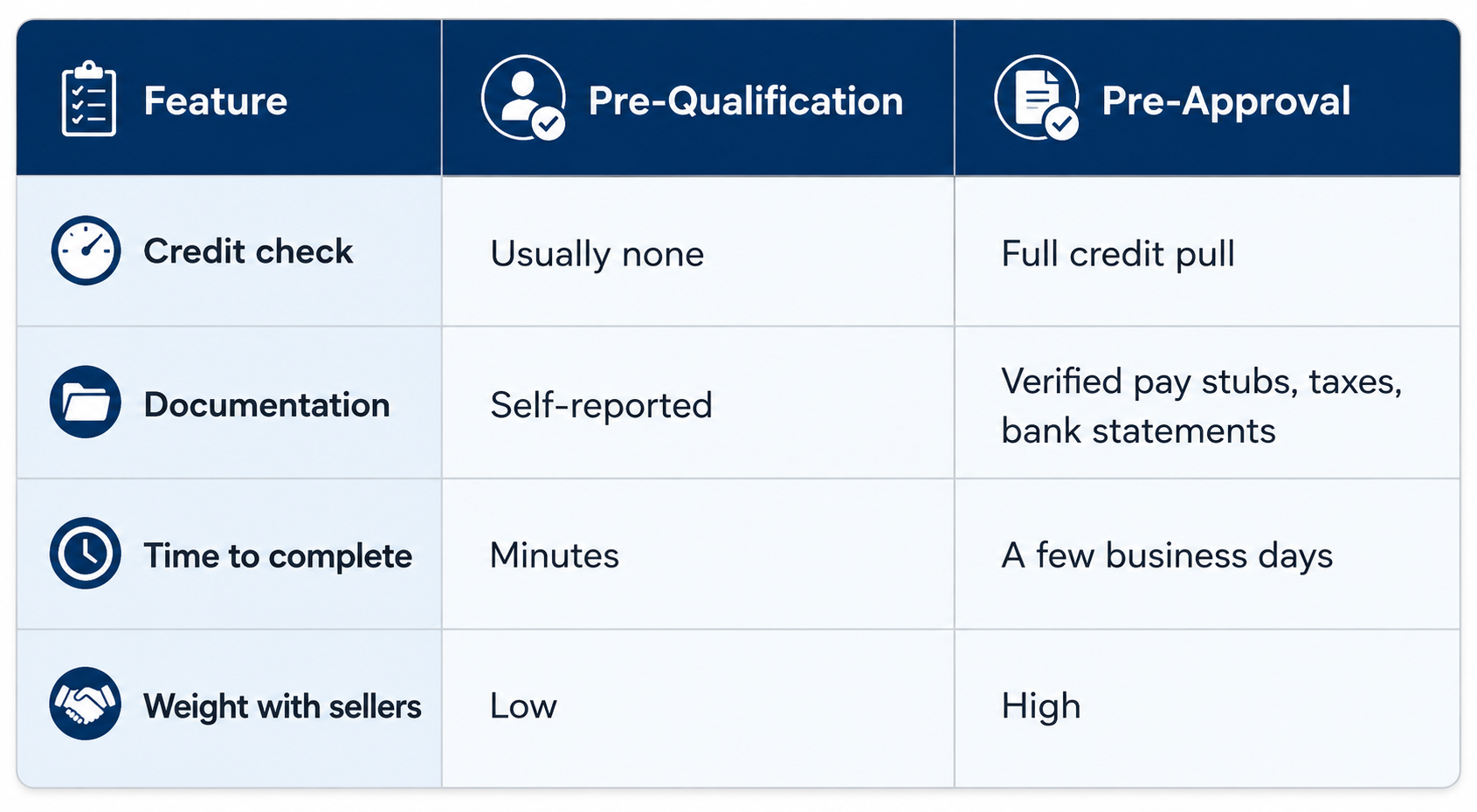
Pre-qualification is the fastest way to get a general sense of your buying power. You share basic details about your income, debts, and savings with a lender, and they run a quick, informal calculation to estimate what you might qualify for. Most lenders don't pull a full credit report at this stage, so the number you get is really just an educated guess rather than a guarantee.
Because the process relies on numbers you report yourself, prequalification letters carry less weight than a formal approval does. They're still useful early on, though, especially if you're trying to figure out a realistic price range before you start touring homes or working with a real estate agent.
Buyers who still have questions about mortgage pre-approval often find it easier to get a straight answer directly from a loan officer rather than piecing information together online. It's a bigger commitment than pre-qualification, but it's also what actually moves your offer forward once you find a house.
Pre-approval goes several steps further than a simple estimate. You'll fill out a full mortgage application and submit documentation like pay stubs, tax returns, and bank statements so the lender can verify what you've reported. The lender also pulls your credit report, which means signing a credit authorization that allows them to check your score and payment history.
Once everything checks out, you'll receive a pre-approval letter that states a specific loan amount, along with the type of loan and the rate you're likely to get. That letter is what most sellers want to see attached to an offer, because it shows a lender has already reviewed your finances and is willing to lend you a defined amount.

The two stages differ in almost every practical way, from how long they take to how much a lender actually verifies. Pre-qualification relies on the numbers you provide, while pre-approval is backed by documents a lender has already checked. That gap in verification is exactly why one letter carries so much more weight than the other once you're ready to make an offer. A quick side by side makes the difference easier to see.
If you're just starting to think about buying a home, pre-qualification is a reasonable first move. It gives you a ballpark number without much effort, so you can decide whether now is a realistic time to shop. Once you've settled into a serious search, moving into pre-approval puts you in a much stronger position, particularly in a market where multiple offers are common.
If you'd like a clearer sense of what you can realistically afford before touring open houses, reaching out to Mares Mortgage is a good place to start.
Learn From These Mistakes Before You Overpay for a House
In markets where homes get multiple offers within days, a pre-approval letter can be the difference between winning and losing a bid. Sellers and their agents see it as proof that financing won't fall through, which matters more to them than the size of your down payment in many cases. Buyers who show up with competitive home offers backed by a real pre-approval tend to move faster through negotiations, because there's less guesswork about whether the deal will actually close.
A pre-approval letter also gives you a firmer number to work with. Instead of guessing at what you can afford, you know the exact price range a lender is willing to support, which makes it easier to shop with confidence and avoid falling for a house that's out of reach. It can also speed up closing later, since much of the financial verification is already on file with your lender by the time you're under contract.
Gathering your paperwork ahead of time makes the pre-approval stage move faster. Most lenders ask for recent pay stubs, W-2s or 1099s, bank statements, and photo identification, along with details about any other properties you own. Having your mortgage documents organized before you apply usually means fewer delays and fewer follow-up requests from your loan officer.
The pre-approval process itself typically takes a few business days once your documents are in, though it can move faster if you respond quickly to any requests for clarification. Some lenders can turn it around in as little as 24 to 48 hours for straightforward files, while more complex financial situations, like self-employment income or multiple properties, tend to take a bit longer to fully verify.
Related: How to Buy a House With Bad Credit
For buyers who want a more direct answer about their specific situation, connecting with Cubie Hernandez and his team can help you map out the right next step for your budget and timeline.
Pre-qualification and pre-approval aren't interchangeable, even though they sound like they should be. One gives you a starting point, and the other gives you something a seller can actually trust. Knowing the difference before you start touring homes means fewer surprises later, and a much smoother path from browsing listings to holding your own set of keys.


.png)

